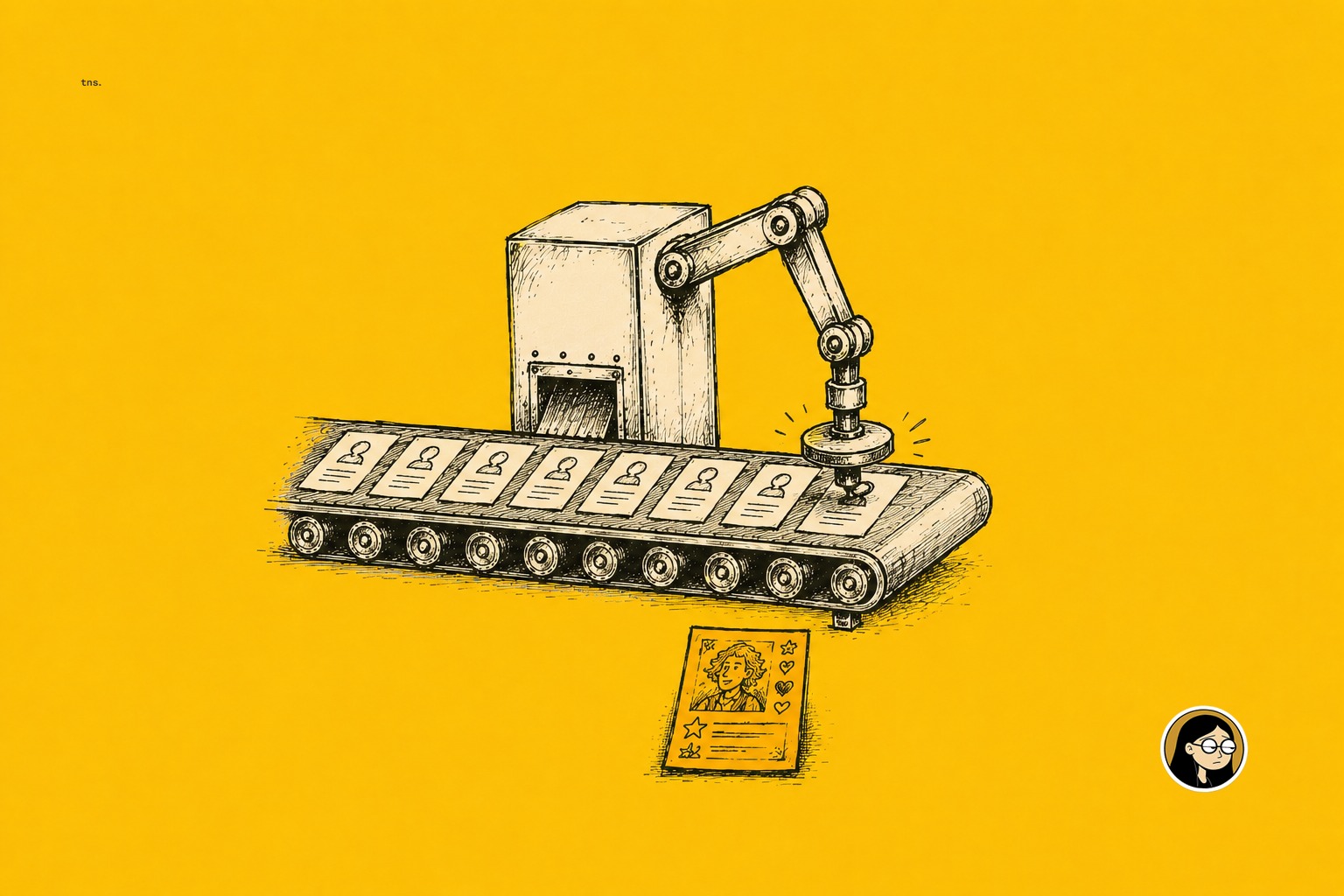
If AI Can Find, Email, and Haggle With Creators, What Is an Agency Actually For?
Last month, an AI did the part of my job that used to take a whole day. It did it in an hour. It cost about as much as a coffee. And it did it well, which is the uncomfortable part.
The job was building a campaign proposal. The old way: pull the data, cross-check it, format it into something a client will nod at. The new way: a crawler, a few tools wired together through a CLI and an API, a few dollars of credits, then twenty minutes scrubbing the AI smell off the prose, because clients can tell, and pretending otherwise is its own kind of insult.
So I did the thing you do when a tool quietly eats a chunk of your work. I made a list of everything else AI can do in influencer marketing now. Find creators? Done. Email them, follow up, chase the deliverables? Automated. Build the post-campaign report? Done. Run the analysis? Done. Negotiate the rate? There are platforms for that. And then the part nobody asked for: AI creators, and a tool that spits out a hundred or five hundred UGC videos in an afternoon.
Read that list back. That’s most of what an agency bills for. Find, brief, manage, report. If that’s the job, the job’s in trouble.
So here’s the question I actually want to sit with. If AI can find, email, report on, and haggle with creators, what’s an agency for?
The 80% was always the easy part
Start with why this happened so fast, because it wasn’t an accident.
The standardized layer of influencer marketing was always the bulk of the work. Not the interesting bulk. The tedious bulk. Someone has to scrape together a longlist, sanity-check the follower counts, write the brief, chase the assets, drop the screenshots into a deck. None of it is hard. It’s just slow, and it’s the kind of slow that scales badly, so brands paid someone else to absorb it. That someone was usually an agency.
AI is extremely good at “not hard, just slow.” That’s the entire pitch. So the layer that was most of the invoice is the layer getting hollowed out first, and faster than the people selling the tools expected. Brands have noticed. Why pay an agency markup on discovery when the discovery tool is a subscription and a junior marketer can run it?
I want to be honest here, because the defensive version of this essay is boring and wrong. This is real. The agency that exists to find people, send briefs, and produce reports is being compressed, and it should be. A spreadsheet of creators is not sacred craft. I automated mine.
But “this is real” and “agencies are finished” are not the same sentence. The first one is true. The second mistakes the 80% for the whole thing.
What doesn’t fit in a dashboard
Here’s what the 80% was hiding.
The first thing is judgment, and I mean the unglamorous version. Not “which creator has the best engagement rate.” The tool will tell you that, and it will be wrong in the way that matters. I mean: which creator fits this brand, in this market, at this moment. I’ve watched an AI score a creator a 9 out of 10, and I’ve watched that creator move zero product, because the score measured reach and the campaign needed trust, and those are two different things that happen to share a chart. A creator who’s gold in one Southeast Asian market is a coin flip in the one next door, because the ecosystems aren’t the same ecosystem wearing different flags. The same creator’s responsiveness, their rate logic, their willingness to move a shoot date, all of it shifts around a religious season or a sales peak. That’s not in the dataset. It’s in the part of my head that’s been doing this for years and is bad at explaining itself.
Then there’s relationship. Whether a creator gives you a good slot or the leftover one. Whether they reshoot when the client rewrites the brief at 11pm. Whether, when something goes sideways, they pick up the phone. An AI writes a flawless cold email. It can’t read the silence after “seen 12:01” and tell you whether to wait, nudge, or quietly move on. That call is built out of a hundred small interactions, and it doesn’t transfer. It’s the least scalable asset in the business, which is exactly why it’s worth something.
And the third is the one that’s hardest to put on a slide: working across cultures without breaking anything. Running a team spread across several Southeast Asian markets and beyond, where the etiquette, the taboos, and the negotiation tempo are all different and all unspoken. That isn’t a workflow. You can’t prompt it.
Stack those three, and that’s what’s left. The agency worth its rate now sells the stack. Not “we’ll find you people” but “here’s how you should build your creator matrix in this market.” Not “we’ll run the campaign” but “the campaign ships on time and on quality, and when it breaks, someone catches it.” Plus the relationships with the creators and talent agencies who actually matter, which have no shortcut and never did.
What to do about it
If you run an agency: stop selling the 80%. Not “stop doing it.” Do it, faster, with the tools. Use the AI discovery and outreach platforms; they’re good now, and the time they free up is the point. But stop pricing that work like it’s the work. Sell the 20%, and put which is which on the proposal, out loud. The agencies that don’t are about to learn their clients can do math.
If you’re the brand: you can buy the tools and run the 80% in-house. Genuinely, go ahead. Just be clear about what you’re not buying when you do, which is the judgment, the relationships, and the cross-cultural reflexes that decide whether the campaign works at all. Don’t pay agency rates for tool-work. Don’t expect tool-work to hand you the agency outcome. Those are two different purchases, and pretending they’re one is how campaigns quietly underperform while every dashboard looks great.
The honest forecast is that the agency gets smaller. Fewer people, more technical. The generalist gets replaced by someone who’s fluent with the tools and still good on a call with a creator three time zones away. That isn’t a tragedy, it’s a correction. The agencies refusing to restructure around it are the ones losing accounts, and they’ll tell you it’s the economy.
One thing worth noticing: the 20% looks easy from outside. “You just talk to the creators, right?” I wrote a whole other post about that sentence. It’s the work nobody respects until it’s the work that didn’t get done.
So, what is an agency for?
Not the list AI just ate. That list was never the job. It was the part of the job that was easy to invoice, so we invoiced it, and now we can’t, and that’s fine.
AI didn’t take my work. It printed an itemized receipt of it. The cheap line items are automated. The expensive ones are the part I was always being paid for. I just never had to say it out loud.
The proposal still took an hour. The judgment about who actually goes in it took years, and that part doesn’t ship with a CLI.