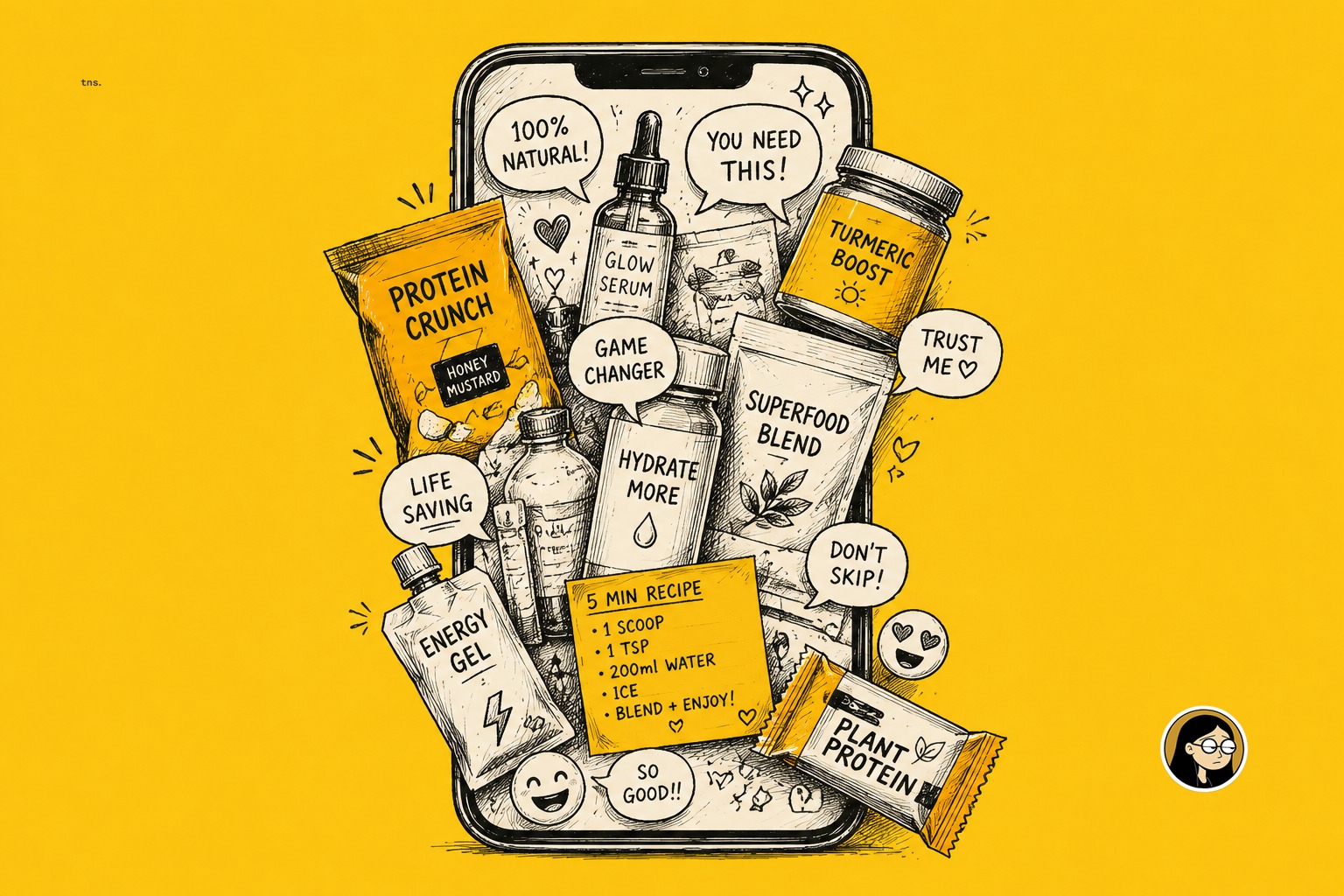
Why Does Your Client Think a 30-Second TikTok Can Carry Five Products, a Personal Story, and a DIY Recipe?
The influencers had already filmed.
The brief was clear. The timeline held. Everyone had signed off.
Then the client looked at the footage and said: I paid for this. I want more.
More products. More talking points. More proof that the budget was worth it. Specifically: five SKUs, a personal usage story, and a DIY recipe — all inside a TikTok that was supposed to be thirty seconds long.
I did not say what I was thinking. That is the agency original sin.
There’s a particular kind of client that keeps this industry interesting in all the wrong ways.
You meet them in the first call. They say something like: We just want to see what you can do for us. No brief. No KPIs. No reference. Just a vague wave in the direction of influencer marketing.
Some of them mean it as an invitation. They’re genuinely new to this, curious, open to being guided. These clients are a gift — they let you build the strategy, they follow the logic, they trust the process.
Some of them mean something else entirely. They have a very specific vision locked inside their head, but they won’t tell you what it is until you show them something wrong. Then the notes start. Then the rewrites. Then the brief that wasn’t a brief becomes twelve briefs, each one slightly more impossible than the last.
The client in this story was both. Not a gift. Not a nightmare. Something in between — which is, in many ways, harder than either.
They were a food brand. Well-established in China. Wanted to expand into Southeast Asia. Had never run an influencer campaign outside their home market, where the rules, the platforms, and the creator economy work completely differently.
In China, tightly controlled content isn’t unusual — it’s the default. At least, that’s been true for every client I’ve worked with. The brand owns the message. The creator executes it. That’s the contract.
Southeast Asia doesn’t work that way. Not because creators here are unprofessional, but because the audience is different. They follow people, not brands. The casualness isn’t a bug. It’s why the content works.
These two assumptions walked into the same campaign and never formally introduced themselves.
We spent months aligning on creators. More months on the brief. By the time influencers were contracted and filming, we were nearly eight months in.
And then the footage came back fine. Actually fine. The kind of fine that makes you exhale quietly and think: okay, we’re going to make it.
Then the client watched the videos.
I paid for this. I want more.
Five products. Personal story. DIY. All of it. Every video. Every creator. Non-negotiable.
Here is what a thirty-second TikTok can hold: one idea, delivered well, with enough personality to make someone stop scrolling. That’s it. That’s the whole container.
What the client was describing was not a TikTok. It was an infomercial with a creator’s face on it.
The creators pushed back. Of course they did.
They had built their audiences by being specific, fast, and themselves. Their followers weren’t there for product demonstrations. They were there for them — their voice, their humor, their way of seeing things. Asking them to stuff five products into a short video wasn’t just a creative direction. It was asking them to betray the exact thing that made them worth hiring.
The client’s position: I’m not wasting my budget on one product when I have five to sell.
The creator’s position: I’m not torching my channel engagement for a client who doesn’t understand the platform.
Both positions are completely rational. Both are completely incompatible.
And I was standing in the middle, nodding at both of them.
This is where agencies talk about themselves as strategic partners. About managing expectations. About finding the win-win.
Here is what actually happens: everyone tries to keep everyone happy, the original goal gets quietly buried, and the work gets done. Technically. The campaign runs. The content goes live. The report gets written.
But the creators say, privately, that they won’t work with this brand again.
The client, delighted, says they want to run another campaign. Bigger this time.
One campaign. Three parties. Three completely different versions of what just happened.
This will keep happening. I’ve made peace with that.
Not because nothing can be done. But because the nature of the job is that you are always standing between what someone wants and what will actually work — and most days, you’ll nod when you should push back. That’s the original sin. Not the difficult client. Not the frustrated creator. The moment you chose to keep everyone comfortable instead of keeping everyone honest.
You won’t stop doing it entirely. Neither will I. But you can catch it earlier. You can learn to ask the one question that cuts through everything: Is what we’re making still pointed at the original goal?
Sometimes they’ll say no anyway. That’s the job.
But you asked.
If you already know exactly what you want — shot for shot, word for word — you don’t need a creator. You need a production company and a script. Creators are expensive precisely because they bring something you can’t write into a brief: an audience that actually trusts them.
That trust is not a bonus. It’s the whole point.
Brief accordingly.